
Gallium: The Inelastic Byproduct Powering AI Semiconductors (GaN, GaAs & InP)
- David Rogers
- AI Buildout Supply Chain
- 2026-06-30
NEED TO KNOW
- Compound Semiconductor Enabler: High-purity (6N–7N) gallium enables GaN power switches for efficient GPU rack power conversion, GaAs RF devices, and InP photonic interconnects.
- Inelastic Byproduct Supply: Gallium is recovered almost exclusively as a low-concentration (~50 ppm) byproduct of bauxite (aluminum) and zinc processing, making supply inelastic to sudden price spikes.
- Near-Total China Monopoly: China controls 98–99% of global primary gallium output, exposing Western tech firms to strict export licensing and geopolitical supply chokepoints.
- InP-on-GaAs Cost Breakthrough: Innovations like Fraunhofer ISE's InP-on-GaAs substrate growth promise to slash photonic wafer costs by up to 80% while bypassing pure indium constraints.
Gallium is a foundational element for compound semiconductors used in modern AI infrastructure. Gallium nitride (GaN) chips convert electrical power efficiently inside data center racks, reducing heat and energy waste. Gallium arsenide (GaAs) enables high-frequency wireless communications for 5G and 6G networks /Yole/. Indium phosphide (InP) photonics chips use gallium layers to transmit data with laser light between large GPU clusters.
Gallium Byproduct Extraction & Precursor Refining Process
Bayer Process Extraction
Alumina Liquor RecoveryExtract trace gallium metal from liquid sodium aluminate inside aluminum refining plants.
Resin Separation
Hydrometallurgical IsolationCapture crude gallium metal from the liquid solution using specialized chelating resin columns.
Fractional Zone Refining
Ultra-Pure Metal DistillationPurify raw gallium metal using melt crystallization until it reaches 99.99999% purity.
Precursor Chemical Synthesis
MOCVD Precursor ManufacturingReact pure gallium with organic gases to form trimethylgallium for growing GaN power and GaAs laser chips.
Semiconductor-grade gallium must reach 6N–7N purity (99.9999–99.99999%) through multi-stage refining, zone refining, fractional crystallization, distillation, and emerging plasma-chemical methods to support defect-free MOCVD epitaxial growth using trimethylgallium precursors /ScienceDirect/. Nearly all primary low-purity gallium (~848t in 2024, ~900t in 2025) is a byproduct of bauxite-to-alumina or zinc processing, with China supplying 98–99% of global output. The United States has had zero primary production since 1987 /USGS/.
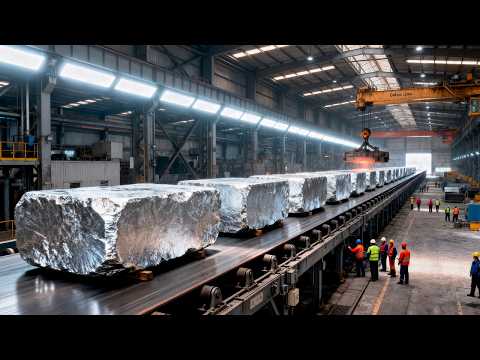
Expanding supply beyond current byproduct streams faces steep technical and economic hurdles. Gallium concentrations in bauxite are low (~50 ppm), and recovery depends on installing specialized ion-exchange or solvent-extraction circuits at large alumina or zinc plants /Minerals Engineering/, capacity that is unevenly distributed and concentrated in China. Current byproduct recovery already offers some headroom (potentially several times present output by optimizing cut-off grades and recovery efficiency without massively increasing aluminum or zinc production), but pushing further requires either scaling host-metal output (risking price crashes in those larger markets) or shifting to lower-grade residues, red mud, coal ash, or dedicated processes whose marginal costs can rise dramatically. Emerging solutions such as improved chelating resins /Ecolab/, plasma purification, and scaled new-scrap recycling aim to flatten this cost curve and reduce waste, yet deployment is slowed by high capex, process integration challenges, and limited non-Chinese expertise in extraction technology.
Demand is accelerating rapidly. AI data centers and high-performance computing drive GaN adoption for efficient power conversion, while exploding needs for co-packaged optics and high-speed networking favor InP and related photonics. A promising 2025 breakthrough from Fraunhofer ISE shows that high-quality InP layers can now be grown on larger, more scalable GaAs substrates (InP-on-GaAs), potentially cutting production costs for InP-based photonics by up to 80% while easing indium supply constraints for AI optical interconnects /Fraunhofer ISE/. Broader compound-semiconductor markets are projected to grow at double-digit CAGRs, with GaN power devices expanding especially fast in EVs, renewables, and telecom infrastructure.
Geopolitical concentration adds urgency. China’s near-monopoly on primary gallium, combined with export controls and past bans (partially suspended into 2026), creates supply-chain vulnerability for Western chipmakers /CSIS/. Key non-Chinese players include Japanese refiners (Sumitomo, Dowa), Canadian recyclers (Neo Performance Materials), European specialists (Umicore for precursors, Freiberger for GaAs substrates), and downstream leaders such as Wolfspeed (GaN), Qorvo (GaAs), and photonics companies. Promising diversification includes new scrap-recovery facilities (e.g., MTM Texas targeting early 2026) /PR Newswire/, alumina-plant integrations in Australia, and restarts in Kazakhstan and elsewhere, but these remain small relative to Chinese capacity. Accelerating allied recycling, co-located recovery, and strategic stockpiling will be essential to secure the gallium flows that underpin AI power and photonics infrastructure.
Key Insights
Why is gallium a critical material for high-performance AI semiconductor applications?
Gallium enables advanced compound semiconductors like gallium nitride (GaN) for energy-efficient power conversion in data centers and indium phosphide (InP) for high-speed optical transceivers. These materials allow AI infrastructure to handle high power densities and transmit data between GPU clusters with ultra-low latency, bypassing the physical limitations of traditional silicon.
Why is the global gallium supply considered inelastic?
Gallium is produced almost exclusively as a low-concentration byproduct of bauxite mining for aluminum and zinc refining, meaning its supply cannot easily scale in response to price spikes without expanding host-metal refining. China controls 98% to 99% of primary global gallium production, leaving the United States and other Western nations completely dependent on imports or recycling.
What technological breakthrough is helping reduce indium constraints in optical networks?
Researchers at Fraunhofer ISE demonstrated that high-quality indium phosphide (InP) layers can be grown on larger, more scalable gallium arsenide (GaAs) substrates. This InP-on-GaAs technology can cut the production costs of photonic wafers by up to 80% while easing reliance on pure indium substrates for optical interconnects.